


Have you ever shopped for a solar system and felt like you were learning a new language? Me too. Solar adoption in Pakistan is exploding, but along with panels and inverters has come a flood of Solar Terminology that can confuse buyers and slow decisions. I’m writing this as a content strategist and someone who’s watched customers get tripped up by terms like PV, kWp, module, and perovskite. My goal: translate the evolution of solar terminology into plain English, show why each term matters, and point out what every homeowner and installer in Pakistan should actually care about.
Photovoltaics, PV, and the photovoltaic effect — what they really mean
Photovoltaics (PV) is the umbrella term. It describes the process that turns light (photons) into electricity (voltage) — the photovoltaic effect. A solar cell (or photovoltaic cell) is the tiny device that performs this magic. Many cells connected in a framed unit are called a module or panel, and multiple panels form an array. Simple? Sort of — but each word carries implications for performance, warranties, and cost. For the official basics and the historical note that practical silicon solar cells began showing real promise at Bell Labs in the 1950s, see NREL and the U.S. DOE.
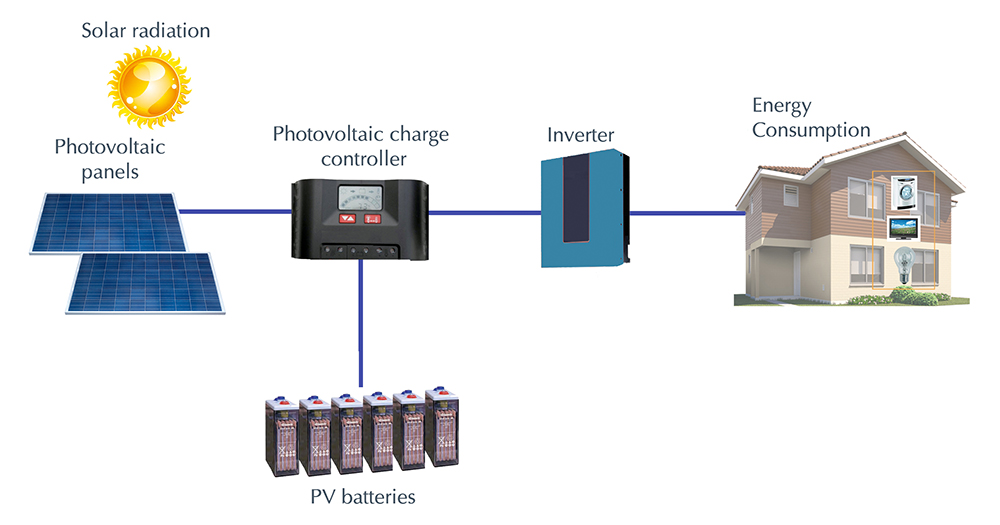
Analogy: If the sun is a bakery, a solar cell is a single cookie, a module is the cookie tray, and an array is the entire oven — all working together to bake electricity.
kW vs kWp vs kWh — the units that confuse everyone
Which do you care about: power or energy?
- kW (kilowatt) is instantaneous power — like the top speed of a car.
- kWp (kilowatt-peak) is a nameplate rating for PV under Standard Test Conditions (STC): the ideal lab conditions used to compare panels. Think of kWp like the “horsepower under lab test.” It’s important when sizing a system.
- kWh (kilowatt-hour) is what your utility bills measure — energy consumed over time. That’s what saves you money.
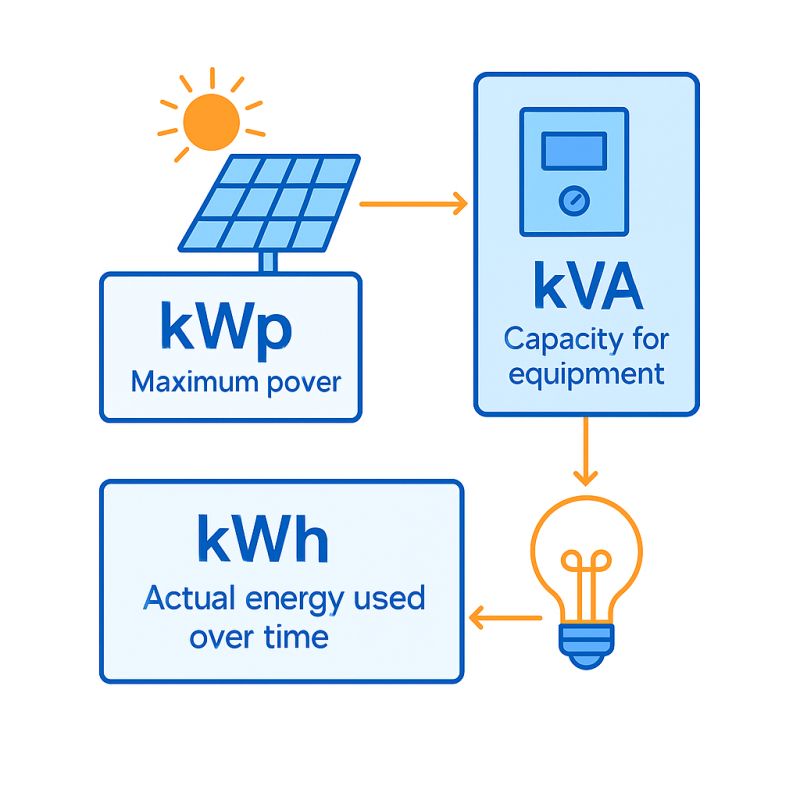
Pro-tip: When installers quote “5 kW system” or “5 kWp system”, ask whether they mean DC nameplate kWp (common) and how many kWh you can realistically expect per month, given Pakistan’s sunlight (GHI).
Standard Test Conditions (STC) — why panel ratings are optimistic
Panel wattage is measured at STC: 1,000 W/m² irradiance, cell temp 25°C, AM1.5 sunlight spectrum. Real roofs in Karachi, Lahore, or Quetta rarely match STC — temperature, dust, orientation, and shading cut real output. So treat manufacturer wattage as a headline number, not a guaranteed delivery.
Panel types & buzzwords: monocrystalline, polycrystalline, PERC, TOPCon, perovskite — what they mean for you
- Monocrystalline vs polycrystalline: basic silicon forms. Mono is denser and usually more efficient per area.
- PERC (Passivated Emitter Rear Contact) and TOPCon are incremental cell technologies that squeeze extra efficiency from silicon (small dollars for better panel yields).
- Perovskite is the buzzy new material promising dramatic efficiency gains and low cost, but stability/time-in-field is still being proven. Recent industry breakthroughs suggest hybrid silicon-perovskite cells could boost efficiency, but commercial reliability is the hurdle. For cutting-edge progress and industry validation, see Reuters’ coverage of perovskite-silicon combos.
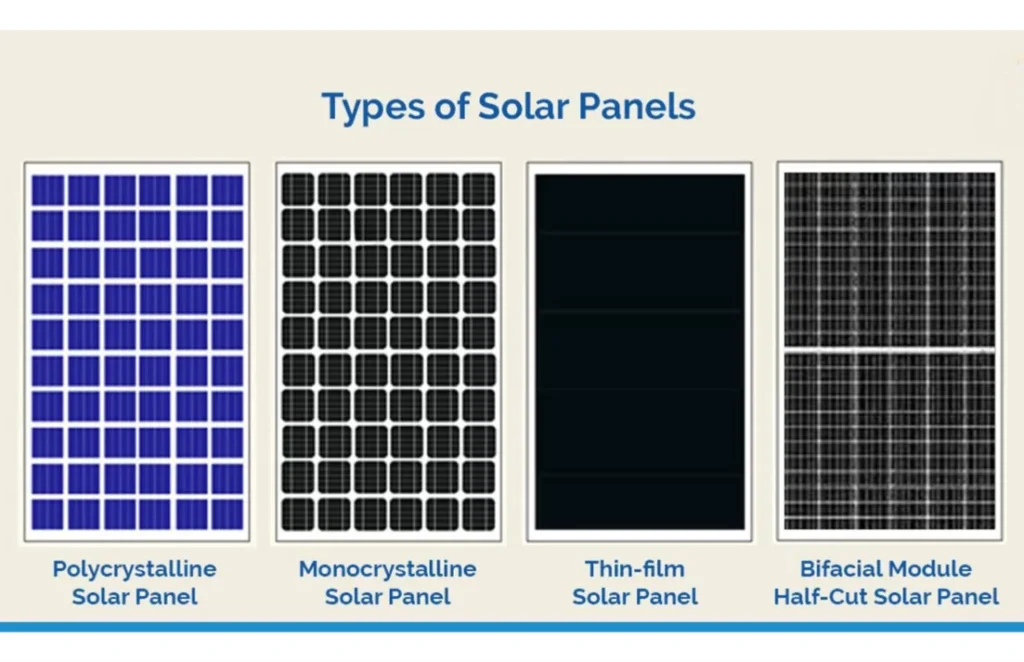
Analogy: These improvements are like engine tuning — same vehicle (silicon), but newer parts and designs get more miles from the same fuel (sunlight).
Technical but useful: inverter, BOS, derating, LCOE — why these matter
- Inverter: converts DC from panels to AC for your home. Hybrid inverters now support batteries and smart functions.
- BOS (Balance of System): wiring, racks, meters, protections — usually 20–40% of project cost.
- Derating factor: real-world losses (temperature, inverter efficiency, dust). Expect 10–20% derating vs nameplate.
- LCOE (Levelized Cost of Energy): a high-level metric comparing the lifetime cost of solar vs grid power — useful for businesses and policy. These terms predict real payback more than the panel sticker price.
Why Pakistan’s vocabulary matters now — market snapshot and consequences
Pakistan’s rooftop and distributed solar market has surged in recent years. By various industry tallies, net-metered rooftop capacity reached multiple gigawatts by 2024–2025 as households and businesses rushed to avoid rising tariffs — a boom that affected imports, grid dynamics, and policy. This rapid adoption shows why accurate terminology is no longer academic: policymakers, users, and installers need the same language to design fair tariffs and technical solutions. Reports from PV Magazine, Reuters, and NEPRA document this scale-up and the accompanying grid challenges as the country absorbed vast amounts of Chinese-imported modules.
Why this affects you: If you don’t know the difference between a hybrid inverter and a grid-tied inverter, you might buy the wrong system for net metering or battery backup — costing you time and rupees.
How the language evolved — from lab terms to consumer speak
Early PV research used academic descriptors: photovoltaic effect, p–n junction, bandgap. As products met consumers, marketing-friendly labels — solar panel, solar kit, turn-key — replaced the lab vocabulary. Recently, a spate of new terms (BIPV, smart inverter, community solar, LFP battery) has merged solar with home automation and smart grids. That’s why linking solar literacy to smart-home knowledge matters — for homeowners who want integrated systems. (If you missed it, check our piece on Why Smart Homes Are the Next Big Trend in Pakistan for how solar and home automation intersect.)
Simple examples — how solar terminology changes decisions
Example 1 — Choosing panel size: Two panels rated 400 W each (STC) produce 800 W at peak. But in Lahore midday heat, you might see only ~85–90% of STC per panel. So a quoted 5 kWp system could produce less than “5 kW” at midday — expect annual kWh and not just kWp.
Example 2 — Net metering missteps: If an installer says “on-grid system” without clarifying inverter type or anti-islanding protections, you could be ineligible for net metering under NEPRA rules. Always ask for the words: grid-tied inverter + net-metering compliance certificate.
Practical checklist — words to memorize before you buy
- PV / Photovoltaic — the tech.
- Cell / Module / Panel / Array — size hierarchy.
- kWp vs kWh — lab rating vs billable energy.
- STC — the lab conditions behind manufacturers’ numbers.
- Inverter type (grid-tied / hybrid / off-grid) — determines battery/feeding behavior.
- PERC / TOPCon / Perovskite — efficiency notes, not guarantees.
- BOS & derating — the hidden cost and the real output killer.
- Net metering/buyback rate — how the grid will credit your export.
Conclusion — Language unlocks value
Words shape choices. In solar, a clear vocabulary translates directly to rupees saved, kilowatt-hours gained, and headaches avoided. The solar terminology around photovoltaics evolved from lab jargon into everyday buying language — and now, it’s your toolkit. Ask for kWh estimates, verify STC assumptions, understand inverter types, and watch how new terms (perovskite, hybrid) influence future value. As Pakistan surges into distributed solar, we all benefit when buyers and sellers speak the same language. So next time an installer throws around “kWp” or “PERC”, you’ll know whether they’re talking performance, marketing, or the future of your roof.
If energy is the new currency, then vocabulary is your exchange rate — use the right words and you’ll buy power at a discount. What will your rooftop teach you next?
Ready to speak the language of solar and get a system that actually matches your bill? Contact JS Technology for a free assessment — we’ll translate solar terminology such as kWp into real kWh savings and integrate smart-home features that make sense for Pakistani homes.
(Read more in Why Smart Homes Are the Next Big Trend in Pakistan).
References & further reading (key sources cited above)
- NREL — Solar Photovoltaic Technology Basics.
- U.S. Department of Energy — Photovoltaic Technology Basics. The Department of Energy’s Energy.gov
- EnergySage — Typical Solar Panel Output & Wattage. EnergySage
- STC explanation sources (industry glossaries). alternative-energy-tutorials.com+1
- Reuters — Pakistan’s solar surge & imports coverage. Reuters
- PV Magazine — Pakistan net-metering capacity headlines. PV Magazine
- NEPRA State of Industry Report 2024. nepra.org.pk
- Reuters & Wired — perovskite and new-tech context. Reuters+1