

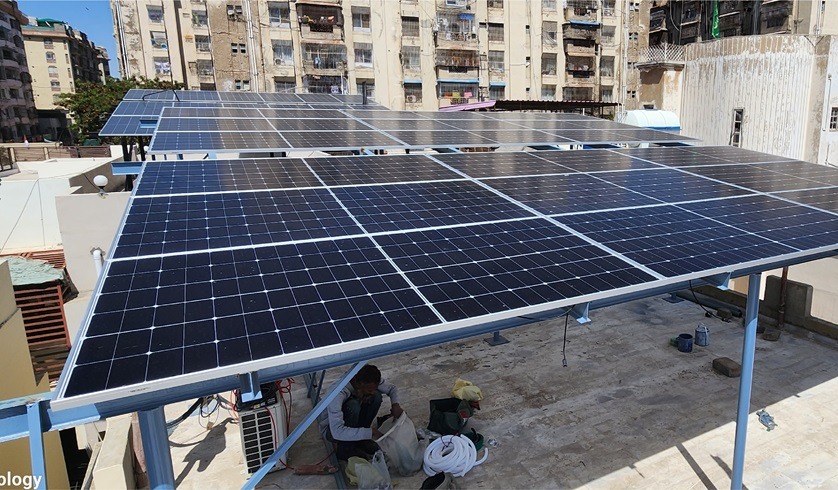
When people talk about rooftop solar, they usually picture homeowners with big, sunny roofs. That leaves millions of renters asking: Am I excluded from the solar shift? The short answer is no — there are practical ways solar solutions for renters to benefit from solar today. Over the next few minutes, I’ll map realistic options for renters in Pakistan, cover cost and payback factors, point out policy traps to avoid, and show how JS Technology can help you choose a workable path.
Why renters are often left behind — and why that’s changing
Solar solutions for renters traditionally, rooftop solar required control of the roof, which pushed renters out. But the market is evolving, and there are ways to make solar solutions for renters possible, portable panels, balcony kits, solar leases/PPAs, and community solar make access possible without home ownership. At the same time, Pakistan’s rapid solar adoption and new financing schemes mean more flexible products are entering the market. This momentum is reshaping access for non-owners.
Practical solar solutions for renters (what actually works)
Below are the most realistic options I recommend, ordered from easiest to most involved.
1) Portable solar kits — plug, power, move
Portable panels, small inverters, and battery packs can run lights, fans, phone chargers, and small appliances. For many renters, a 200–500W portable kit can cut generator and UPS use and reduce monthly costs. These kits are widely available in Pakistan and are a simple, no-permit solution. They won’t replace a full household grid load, but they lower dependence on expensive backup power and can be taken when you move.
Example: A 300W kit that generates 1.2–1.5 kWh/day used for lighting and phone charging can remove 30–50 kWh/month from diesel or grid usage — small savings but immediate and mobile.
2) Balcony & micro-PV systems — compact and legal
Balcony-mounted panels and purpose-built micro-PV kits are designed for apartment railings and small terraces. They usually require minimal mounting and no roof penetration. Output is limited, but they’re a practical, low-impact way to offset lighting, fans, and a refrigerator during the day.
Pro tip: Check landlord rules and building association policies before installing; many landlords accept non-invasive mounts if you promise to remove them at move-out.
3) Landlord-installed rooftop systems — shared savings
One of the most straightforward long-term solutions is a landlord-led install: the owner installs panels on the building’s roof and shares savings with tenants through a rent reduction or a direct electricity credit. This model is win-win: landlords raise property value and tenants pay less for power. Structuring the agreement clearly — who maintains the system, how savings are calculated, and what happens when tenants move — is crucial.
Negotiation tip: Propose a 12–24 month trial period, with transparent metering so both parties can see actual savings.
4) Solar leases, PPAs, and third-party ownership
In other countries, renters access solar through third-party ownership models: a company installs and owns the system, and the tenant or landlord pays a monthly lease or a per-kWh charge (PPA). These products reduce or eliminate upfront costs for the property owner and can be structured so that tenants benefit from lower monthly energy charges.
Globally, these models are well-established; locally, adapting them to Pakistan’s regulations and utility structure is the next step. If you’re a renter in a multi-unit building, ask whether your landlord would consider a lease model — it often requires only a single conversation to start.
5) Community and shared solar (where available)
Community solar projects let multiple users subscribe to a shared array and get credited for the portion of the generation. This is ideal for renters because it requires no rooftop access. While community solar is widespread in some international markets, Pakistan is only beginning to explore large-scale subscription models; nevertheless, community projects and cooperative microgrids are viable for apartment complexes or neighborhoods willing to pool resources.
How much can renters realistically save? — payback and numbers
Savings depend on system size, tariff, and how much of the generated energy you use directly. For small portable kits and balcony systems, payback is measured in reduced diesel/UPS usage and lower small-appliance electricity. For landlord-installed systems or third-party PPAs, payback is shared across units and can be attractive.
If you want to estimate payback for a landlord-installed 10 kW rooftop that serves a 10-apartment block, expect system cost today (after normal discounts) to be recovered in 3–6 years through combined tenant savings, especially if net-metering or on-site crediting is available. For a quick primer on payback methodology, see our detailed guide: Understanding Solar Payback Period: When Will You See Savings?
Policy and practical hurdles renters should know about
Two policy realities matter in Pakistan:
Net-metering rules and reforms. Policy changes around buyback rates and settlement can affect the value of exported energy; this influences landlord ROI and the attractiveness of PPAs. When policy shifts, contracts and savings assumptions must be revisited.
Financing and approvals. Some banks and finance schemes support residential systems, but obtaining finance for a rental building or third-party project requires clear ownership and repayment structures. Local banks and solar financing programs (including those offered by Islamic banks and the State Bank’s solar schemes) are expanding options.
Real-world voice: what renters in Pakistan are already doing
You don’t have to wait for national programs. Anecdotes from city forums and community groups show tenants installing portable kits, negotiating landlord installs, or moving to buildings that advertise “solar-enabled” units. These grassroots moves are practical and often faster than waiting for policy to catch up. (Online forums and local classifieds show a growing marketplace for small kits and rental-friendly options.)
How JS Technology can help (short, practical services)
- Portable & balcony kits: curated, plug-and-play packages sized for tenants.
- Landlord partnership programs: we design landlord-installed systems, model savings per unit, draft simple tenant-savings agreements, and handle installations and maintenance.
- PPA/lease facilitation: We can structure a third-party ownership model and present a clear monthly cost comparison for landlords and tenants.
- Community project advisory: feasibility studies, subscription management, and metering setup for microgrids and shared arrays.
If you’re renting and curious, we’ll run a short checklist and show one or two low-cost starter options you can implement within weeks.
Simple checklist for renters who want to go solar
- Talk to your landlord—the simplest path is a shared rooftop.
- Start small with a portable or balcony kit to test savings.
- Request a clear proposal if the landlord agrees: who pays for maintenance, how savings are credited, duration of the agreement.
- Ask about financing—soft-loan schemes and bank programs can lower the upfront cost.
- Get everything in writing—avoid future disputes over who owns and maintains the system.
Conclusion — renters have options; the smart move is to start small and scale
Being a renter shouldn’t stop you from using solar. The options range from portable kits you can carry to community or landlord-installed systems that slash monthly costs. Policy shifts will change the economics, so keep assumptions conservative and favor arrangements with clear paperwork. I believe the most successful renter projects will be the ones that start with a small, visible win — a balcony kit or landlord pilot — and expand from there.
For solar solutions for renters, if you want a practical roadmap for your situation, send us your monthly bill and a photo of your balcony or roofline. We’ll suggest two renter-friendly options and a rough payback estimate you can use in conversations with your landlord.
Selected references and further reading
- Pakistan’s accelerating solar adoption and market context. Reuters
- Net-metering reforms and implications for payback. IEEFA
- Local solar financing programs and bank offerings. Meezan Bank+1
- How renters globally access solar (leases, PPAs, community solar). EnergySage+1
Q&A (5 quick Q/As)
Q: Can renters in Pakistan install solar panels?
A: Yes — renters can use portable and balcony kits, or ask landlords to install rooftop systems and share the savings. We help with options and paperwork.
Q: Do portable solar kits actually save money?
A: They can reduce generator/UPS usage and lower small-appliance electricity costs; savings depend on how you use them.
Q: Will landlords agree to install solar?
A: Many do when shown clear savings and a simple tenant-savings agreement. We offer landlord partnership packages that make the case straightforward.
Q: Are there financing options for renters or landlords?
A: Yes—banks and specialized solar financing schemes in Pakistan offer loans and installment plans that can cover residential and small commercial systems.
Q: Can JS Technology set up a community solar project for my building?
A: Yes — we handle feasibility, design, metering, and subscription management for shared solar systems.