

Most people believe solar panels are “install and forget.” That’s only half true. The other half is the question: How to Improve Solar Efficiency?
Yes, solar systems are low-maintenance compared to generators or UPS systems. But low maintenance doesn’t mean no maintenance. Dust, heat, wiring issues, inverter faults, and ignored alerts quietly reduce output — month after month.
I’ve seen homeowners lose 15–30% of their solar output without realizing it. Not because the system was faulty, but because no one checked it. This guide explains how solar maintenance actually works, how often you need it, what you can do yourself, and when professional help makes sense — especially in hot, dusty climates like Pakistan.
Why Solar Efficiency Is Important
How to Improve Solar Efficiency? Solar panels convert sunlight into electricity using photovoltaic cells. Anything that blocks sunlight or disrupts electrical flow directly reduces output.
Here’s the simple truth:
Dirty panels = lost energy = lower savings
According to industry studies, dust and pollution alone can reduce solar output by 10–25%, and even more in urban or dusty areas. Maintenance isn’t about perfection.
It’s about protecting performance, lifespan, and return on investment (ROI).
How Often Do Solar Panels Need Maintenance?
Cleaning Frequency by Climate
In Pakistan’s climate, cleaning schedules matter more than most people think.
- Urban areas (Karachi, Lahore): Every 2–4 weeks
- Dusty / semi-rural areas: Every 2 weeks
- After storms or heatwaves: Inspect immediately
Rain does not clean panels properly. It leaves residue and watermarks that still block sunlight.
Basic Visual Inspection
Once a month, take 5 minutes and check:
- Cracks or visible damage
- Loose wires or hanging conduits
- Shading from new construction or trees
- Inverter warning lights or error codes
This small habit prevents big problems later.
Essential Solar Maintenance Tips for Maximum Efficiency
1. Clean Panels Safely (No Shortcuts)
The best way to clean solar panels is also the simplest:
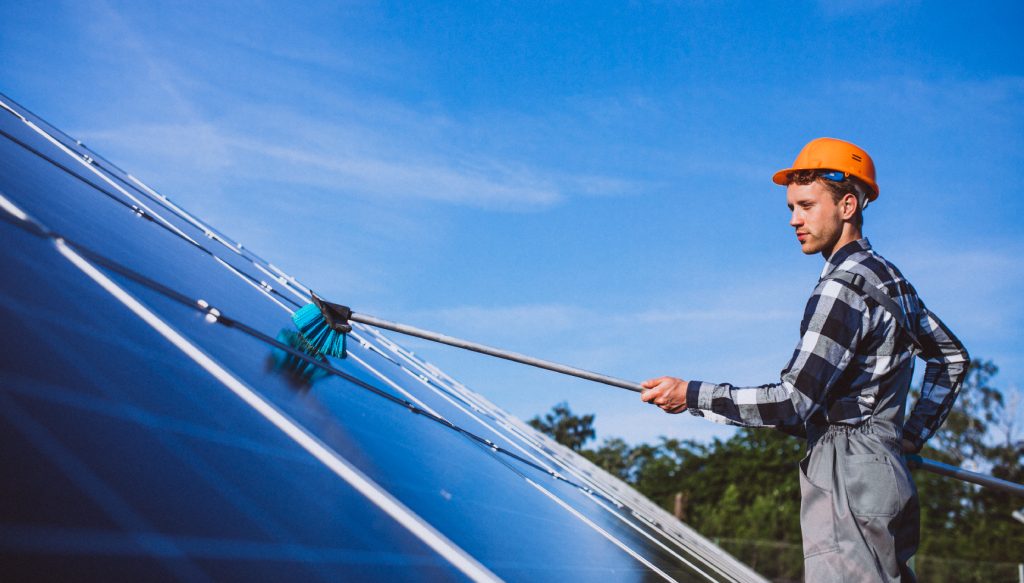
- Use clean water
- Soft brush or microfiber cloth
- Clean early morning or evening
Avoid:
- Harsh detergents
- High-pressure washers
- Cleaning during peak sunlight
Scratches reduce efficiency permanently. Gentle cleaning preserves panel coating and output.
2. Monitor Your System Performance
Every modern system has monitoring — either via an inverter display or a mobile app.
Check:
- Daily energy generation
- Sudden drops in output
- Comparison with previous months
Output drops without weather changes; something needs attention.
If you’ve installed a full home system, this ties directly into your setup. If you haven’t read it yet, our detailed guide on Residential Solar Solutions in Pakistan explains how monitoring, system sizing, and maintenance work together for long-term savings.
3. Inverter and Wiring Checks Matter More Than Panels
Panels usually last 25+ years. Inverters don’t.
Most inverter issues appear as:
- Random shutdowns
- Error codes
- Lower-than-expected production
Check:
- Proper ventilation
- Dust-free placement
- No moisture exposure
Loose wiring or poor earthing can also reduce efficiency and damage components.
Common Issues That Reduce Solar Panel Performance
Dust and Debris: Dust acts like a shade. Even a thin layer reduces light absorption.
Studies show:
- Light dust: ~5–10% loss
- Heavy dust: 20%+ loss
That’s money left on the table.
Shading Problems: The output of the entire string can be decreased by a single shaded panel.
Common causes:
- New buildings
- Tree growth
- Dish antennas or water tanks
A quick reposition or trimming can restore full output.
Weather Damage: Extreme heat, hail, and storms can:
- Damage panel glass
- Affect connectors
- Loosen mounting structures
Post-monsoon inspections are essential.
DIY Solar Maintenance vs Professional Services
DIY maintenance works if:
- System is residential
- Panels are easily accessible
- No inverter errors
- Output drop is minor
Regular cleaning and monitoring go a long way.
Professional solar maintenance is worth it when:
- Output drops suddenly
- Inverter shows repeated faults
- Wiring or earthing issues appear
- Commercial or large residential systems are involved
Professionals use thermal imaging, IV curve testing, and load analysis — tools homeowners don’t have.
How Solar Maintenance Improves Efficiency and ROI
Here’s the math most people miss.
A 5kW system losing 20% output means:
- 600–700 units lost per year
- Thousands of rupees in lost savings
- Longer payback period
With proper maintenance:
- Output stays consistent
- ROI improves
- System lifespan increases
Maintenance doesn’t cost money.
Neglect does.
Solar Maintenance Checklist (Quick Reference)
- Clean panels every 2–4 weeks
- Monitor daily generation
- Inspect wiring quarterly
- Check inverter alerts weekly
- Professional inspection once a year
Simple. Effective. Proven.
Conclusion: Solar Rewards Attention
Solar panels don’t demand much. But they do respond to care.
How to Improve Solar Efficiency? A clean, well-monitored system quietly saves money every single day. A neglected one slowly erodes your investment without warning.
If you’ve invested in solar — or plan to — maintenance isn’t optional. It’s part of responsible ownership.
And if you want your system to perform at its best for 20+ years, start treating maintenance as part of the plan, not an afterthought. If you need guidance, inspections, or professional maintenance, and learn about how to Improve Solar Efficiency, JS Technology helps homeowners and businesses keep their solar systems efficient, safe, and profitable.
Frequently Asked Questions:
Do solar panels require regular maintenance?
If you want to improve solar efficiency, yes! While solar panels are low-maintenance, regular cleaning and inspections help prevent efficiency loss and system faults.
How often should solar panels be cleaned?
In dusty climates, panels should be cleaned every 2–4 weeks for optimal performance.
Can dirty solar panels reduce efficiency?
Yes. Dust and debris can reduce output by 10–30%, directly affecting savings.
What is the safest way to clean solar panels?
Use clean water and a soft brush. Avoid detergents, pressure washers, and cleaning during peak sunlight.
How can I identify whether maintenance is necessary for my solar system?
Sudden drops in energy output, inverter error codes, or visible dirt and damage are common signs.
Is professional solar maintenance worth it?
Yes, especially for large or commercial systems where small losses mean significant financial impact.
Does maintenance increase solar panel lifespan?
Proper maintenance prevents degradation and helps systems reach their full 25–30 year lifespan.
Do you offer solar maintenance services?
Yes, JS Technology provides professional solar inspection, cleaning, and performance optimization services.
How often should residential solar panels be serviced?
Basic cleaning every few weeks and a professional inspection once a year is recommended.
Do you check inverters and wiring during maintenance?
Yes. Full system health checks include panels, inverters, wiring, and safety components.