

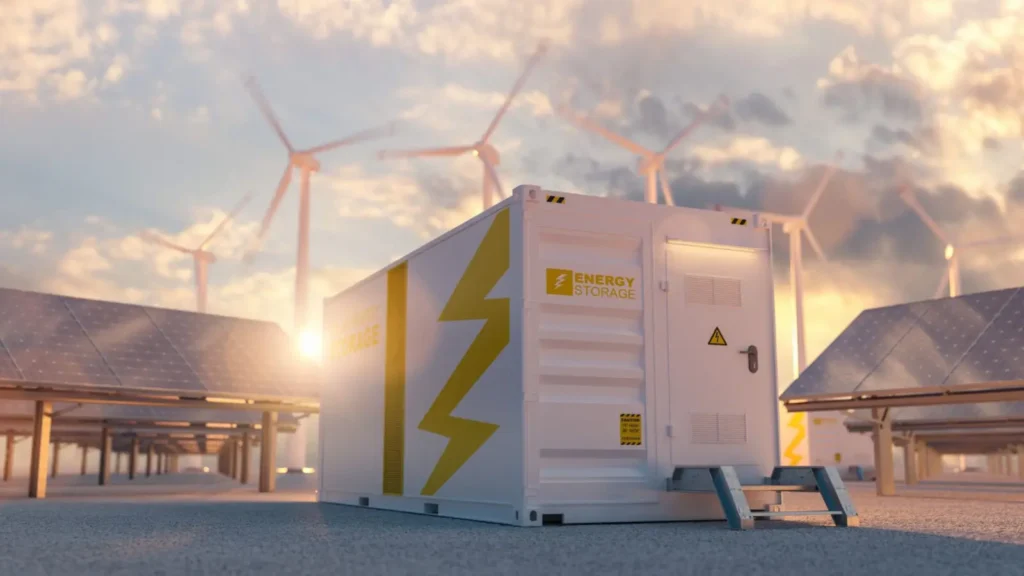
I remember the first time someone explained Battery Energy Storage System (BESS) to me. I nodded along as I understood, but honestly, I was completely lost. Batteries for solar? Aren’t solar panels supposed to… work?
Then I saw my first power bill after installing solar panels without battery storage. During the day, my meter was spinning backward—great. But at night, I was buying expensive electricity from the grid at peak rates. My solar panels were useless after sunset.
That’s when I finally understood why battery energy storage systems matter. And why they’re rapidly becoming essential, not optional, for anyone serious about solar power.
Today, I’m breaking down exactly what a Battery Energy Storage System (BESS) is, how it works, whether it’s worth the investment, and what you need to know before buying one. No technical jargon. No marketing hype. Just clear explanations based on real-world experience and actual data.
What Is a Battery Energy Storage System (BESS)?
Simple Definition of BESS
A Battery Energy Storage System (BESS) is a technology that stores electrical energy in rechargeable batteries for later use. When connected to solar panels, BESS captures excess electricity generated during sunny hours and releases it when needed—typically at night, during cloudy weather, or when the power grid fails.
Think of it like a power bank for your phone, but scaled up to power your entire home or business. Instead of wasting surplus solar energy by sending it back to the grid at low rates, you store it for yourself and use it when electricity prices are highest or when the grid goes down.
Why Battery Energy Storage Matters
Here’s the fundamental problem with solar panels alone: they only generate electricity when the sun shines. Your energy needs don’t stop at sunset.
Without battery storage, you face two bad options. First, you can send excess solar power back to the grid through net metering and buy it back later—but you’re essentially lending the utility company your electricity and paying premium rates to get it back. Second, you remain completely dependent on the grid for nighttime power and have zero backup during outages.
Battery storage solves both problems. You achieve genuine energy independence, maximize the value of every kilowatt-hour your panels generate, and protect yourself against grid failures.
The International Energy Agency reports that global battery storage capacity grew by over 130% in 2023 alone. This isn’t a future technology—it’s happening right now. And the adoption rate is accelerating as battery costs continue falling.
How Does a Solar Battery Storage System Work?
Energy Generation, Storage, and Discharge
The process is surprisingly straightforward once you understand the basic flow.
During daylight hours, your solar panels generate DC (direct current) electricity. This electricity flows to an inverter that converts it to AC (alternating current) that your home or business can use. If you’re generating more power than you’re consuming, the excess electricity charges your battery storage system instead of going to waste.
When the sun sets or clouds reduce solar production, your battery automatically discharges stored energy to power your loads. You’re using solar electricity even when panels aren’t actively generating.
If your battery depletes and you still need power, the system seamlessly switches to grid electricity. The entire process happens automatically—you don’t need to manage anything.
I’ve watched this cycle play out in real installations. A typical home might generate 35 kWh of solar electricity on a sunny day while consuming 25 kWh. That extra 10 kWh charges the batteries. At night, the home uses 15 kWh—10 kWh from batteries and 5 kWh from the grid. Total grid dependence drops from 40 kWh daily to just 5 kWh.
Role of Inverters and Battery Management Systems
Two critical components make battery storage systems work properly: inverters and battery management systems.
The inverter handles power conversion—from DC solar to AC household power, and from AC grid power to DC battery charging. Modern hybrid inverters manage both solar panels and batteries simultaneously, optimizing energy flow based on production, consumption, and battery status.
The Battery Management System (BMS) is the brain of your storage system. It keeps track of the temperatures, charge levels, and voltages of individual cells. It prevents overcharging, excessive discharge, and thermal issues that could damage batteries or create safety hazards. A quality BMS extends battery lifespan significantly by ensuring optimal operating conditions.
Without proper BMS protection, lithium-ion batteries can fail catastrophically. This is why choosing reputable manufacturers with proven BMS technology matters enormously.
Types of Battery Energy Storage Systems
Lithium-Ion Battery Storage
Lithium-ion dominates the residential and commercial solar battery market for good reasons. These batteries offer the highest energy density, meaning they store more power in less space than alternatives.
Most lithium-ion systems used for solar storage are lithium iron phosphate (LiFePO4) chemistry. They’re incredibly safe, with minimal fire risk compared to lithium cobalt oxide batteries used in phones and laptops. They handle thousands of charge-discharge cycles—typically 6,000 to 10,000 cycles before capacity degrades to 80% of the original.
The Tesla Powerwall, LG Chem RESU, and BYD Battery-Box are popular lithium-ion systems. They’re modular, meaning you can start with one battery unit and add more capacity later as needs or budgets change.
Lithium-ion batteries charge and discharge efficiently—round-trip efficiency typically exceeds 90%. You get back 90% or more of the energy you put in, with only 10% lost to heat and conversion.
The downsides? Higher upfront cost compared to lead-acid alternatives, and performance degrades somewhat in extreme temperatures without proper thermal management.
Lead-Acid and Flow Batteries
Lead-acid batteries are the traditional choice—the same basic technology that’s been in cars for decades. They’re significantly cheaper upfront, which appeals to budget-conscious buyers.
But here’s the reality: lead-acid batteries last 3-5 years with proper maintenance, compared to 10-15 years for lithium-ion. They’re much heavier and bulkier. They require regular maintenance, including water refilling for flooded types. They can’t be discharged below 50% capacity without damaging the battery, effectively cutting usable storage in half.
For off-grid applications where upfront cost is the primary concern, lead-acid might make sense. For most residential and commercial solar installations, lithium-ion delivers better long-term value despite higher initial investment.
Flow batteries are an emerging technology using liquid electrolytes stored in external tanks. They offer virtually unlimited charge-discharge cycles and can be scaled independently for power and energy capacity. However, they’re currently expensive and primarily used in large-scale utility applications, not residential settings.
Key Components of a BESS
Battery Cells and Modules
The basic building block is the individual battery cell—similar to AA batteries but much larger. Multiple cells connect in series and parallel configurations to create battery modules with specific voltage and capacity ratings.
For example, a typical residential battery module might contain 100+ individual cells configured to deliver 48-volt DC power at 5 kWh capacity. Larger systems stack multiple modules together.
Cell quality matters enormously. Premium manufacturers like Samsung, LG, and Panasonic produce cells with consistent performance and long lifespans. Cheaper cells from unknown manufacturers create reliability issues and safety risks.
Power Conversion System and Control Systems
The Power Conversion System (PCS) handles bidirectional conversion—turning DC battery power into AC for your home, and converting AC grid or solar power to DC for battery charging.
Modern PCS units are incredibly sophisticated. They manage power factor correction, harmonic filtering, and grid synchronization. They can operate in grid-tied mode, backup mode, or completely off-grid depending on circumstances.
The control system coordinates everything. It monitors solar production, consumption patterns, battery status, grid conditions, and electricity pricing (for time-of-use optimization). Advanced systems use machine learning to predict your energy patterns and optimize storage automatically.
I’ve seen installations where the control system saves an additional 15-20% on electricity costs by intelligently shifting loads and storage timing based on rate schedules.
Benefits of Battery Energy Storage Systems
Energy Independence and Backup Power
This is the benefit most people think about first—and it’s genuinely valuable.
During grid outages, homes with battery storage maintain power automatically. Your lights stay on. Your refrigerator keeps running. Your Wi-Fi router continues working. You might not even notice the outage happened.
I spoke with a homeowner in Karachi who installed a 10 kWh battery system specifically for load-shedding protection. “We used to run a diesel generator 3-4 hours daily,” he told me. “During prolonged outages, we now operate it perhaps twice a month. The battery handles everything else silently.”
For businesses, uninterrupted power means no lost sales, no spoiled inventory, no interrupted manufacturing processes. The value extends far beyond just the cost of electricity. If you’re interested in how Pakistani businesses are approaching this challenge, check out our analysis on the top reasons businesses in Karachi are switching to solar, which includes detailed discussions of battery backup strategies.
Cost Savings and Grid Stability
Battery storage enables sophisticated energy cost optimization strategies.
Peak shaving means using stored battery power during expensive peak-rate hours and recharging during cheap off-peak times. Even without solar panels, this arbitrage saves money.
Load shifting moves your energy consumption from high-cost to low-cost periods. Run dishwashers, washing machines, and charge batteries when electricity is cheapest.
Demand charge reduction benefits commercial users facing charges based on peak power draw. Batteries supplement grid power during high-demand moments, reducing maximum draw and lowering demand charges significantly.
From the grid perspective, distributed battery storage improves overall stability. Thousands of residential and commercial batteries create a virtual power plant that can support the grid during high-demand periods and absorb excess renewable generation when production exceeds demand.
California and Australia have already deployed hundreds of thousands of home batteries in virtual power plant configurations. The technology works at scale.
Residential vs Commercial Battery Storage
Home Solar Battery Storage
Residential systems typically range from 5 kWh to 20 kWh of usable capacity. That’s enough to power essential loads for 4-12 hours, depending on consumption patterns.
Most homeowners prioritize backup power for critical circuits—refrigerators, some lights, internet equipment, and maybe one air conditioner. This approach maximizes backup duration without oversizing the system.
Installation costs for residential lithium-ion battery systems currently range from $8,000-$15,000 for 10 kWh of capacity, including installation. Prices continue declining as production scales up and competition intensifies.
Residential systems usually include user-friendly smartphone apps showing real-time energy flow, battery status, consumption patterns, and savings. It’s surprisingly satisfying watching your battery charge from solar and discharge to power your home.
Industrial and Utility-Scale BESS
Commercial and industrial battery systems operate at entirely different scales—often 50 kWh to multiple megawatt-hours of capacity.
These systems focus primarily on cost optimization rather than backup power. They exploit time-of-use rates, reduce demand charges, and enable participation in grid service markets where utilities pay for flexible load or supply.
A factory might install 500 kWh of battery capacity, charging overnight at ₨15 per unit rates and discharging during peak production hours when grid power costs ₨65 per unit. The economic payback can be under three years.
Utility-scale BESS installations reach hundreds of megawatt-hours. The Hornsdale Power Reserve in Australia provides 150 MW / 194 MWh of grid-scale storage, stabilizing renewable energy integration and providing emergency backup for millions of homes.
Cost, Lifespan, and ROI of BESS
Factors Affecting Battery Storage Cost
Several variables determine what you’ll actually pay for battery storage:
Capacity requirements are the biggest driver. Doubling storage capacity roughly doubles cost, though per-kWh pricing improves somewhat at larger scales.
The chemistry choice significantly impacts price. Lithium-ion costs 2-3 times more than lead-acid upfront but lasts 3-4 times longer and provides double the usable capacity.
Installation complexity varies dramatically. Simple garage installations cost less than systems requiring structural reinforcement, electrical panel upgrades, or extensive trenching.
Incentives and rebates can offset 20-40% of costs in some regions. Check local and national programs before purchasing.
Current lithium-ion battery costs average $400-$600 per kWh installed for residential systems. That price has dropped approximately 85% over the past decade and continues falling 10-15% annually.
Maintenance and Lifecycle
Quality lithium-ion battery systems require virtually zero maintenance. No water filling. No terminal cleaning. No equalization charges. They just work.
Expected lifespan for residential lithium-ion systems is 10-15 years or 6,000-10,000 charge cycles, whichever comes first. Most manufacturers’ warranty systems are for 10 years at 70-80% capacity retention.
Lead-acid systems require quarterly maintenance checks, annual load testing, and water refilling for flooded types. Expected lifespan is 3-5 years with diligent maintenance, less if neglected.
The ROI calculation depends heavily on your electricity rates, usage patterns, and available incentives. In high-electricity-cost areas with time-of-use rates, payback periods of 5-8 years are common. That means 5-10 years of essentially free stored energy after payback.
For areas with frequent outages or poor grid reliability, the value of uninterrupted power often justifies the investment regardless of pure energy cost savings.
The Honest Assessment Nobody Gives You
I need to be direct about something: battery storage isn’t economically compelling for everyone right now.
If you live in an area with stable grid power, low electricity rates, and no time-of-use pricing, the financial case is weak. You’re paying $10,000-$15,000 for peace of mind and environmental benefits, not strong financial returns.
If you’re in Pakistan, dealing with frequent load shedding, rapidly rising electricity costs, and significant time-of-use rate differences, battery storage makes powerful economic sense.
Battery technology is also improving rapidly. Systems installed today will be more expensive and less capable than systems available in 3-5 years. That’s always true with technology, but the improvement rate in energy storage is particularly dramatic right now.
My advice: if you’re installing solar panels now, make sure your system is battery-ready even if you don’t install batteries immediately. Future upgrades become much easier and cheaper.
Conclusion: Storage Changes Everything
Here’s what I’ve learned after years of following energy storage technology: batteries transform solar from a partial solution to a complete energy system.
Solar panels alone are impressive. You generate clean electricity and reduce grid dependence during sunny hours. But you’re still fundamentally reliant on the utility company for reliability and nighttime power.
Add Battery Energy Storage System (BESS), and you gain genuine energy independence. You capture every kilowatt-hour your panels generate. You protect yourself against outages. You optimize consumption timing for maximum savings. You participate in the clean energy transition meaningfully.
The technology works. The costs are falling. The benefits are real.
The question isn’t whether battery storage will become standard for solar installations—that’s inevitable. The question is when it makes sense for your specific situation.
So let me ask you: what matters more to you—minimizing upfront costs or maximizing long-term value and energy independence? Your answer determines whether battery storage makes sense for you today or whether you should wait a few more years.
What’s your biggest concern about Battery Energy Storage System (BESS)? Cost? Complexity? Lifespan? Share your questions in the comments—I’d love to address them.
Ready to Explore Battery Storage Solutions?
At JS Technology, we help homeowners and businesses understand whether battery energy storage makes sense for their specific situations. We provide honest assessments, detailed ROI calculations, and connections to trusted installation partners. Contact us today for a straightforward conversation about your energy storage options—no sales pressure, just clear information.
FAQs: Battery Energy Storage Systems (BESS)
Q1: What is a Battery Energy Storage System (BESS)?
A Battery Energy Storage System stores electrical energy in rechargeable batteries for later use. When paired with solar panels, BESS captures excess electricity during the day and releases it at night or during outages, helping reduce costs, provide backup power, and increase energy independence.
Q2: How does a solar battery storage system work?
Solar batteries store the excess electricity your panels generate during sunny hours. When solar production drops below consumption—at night or during cloudy weather—the battery automatically discharges stored energy to power your home or business. The system manages charging and discharging automatically without user intervention.
Q3: Is battery energy storage worth it for homes?
Battery storage is worth it for homes experiencing frequent power outages, high electricity rates, time-of-use pricing, or poor grid reliability. The value depends on your specific electricity costs, consumption patterns, and how much you value backup power. In stable-grid, low-cost areas, financial payback may take 10+ years.
Q4: How long do solar battery systems last?
Quality lithium-ion battery systems last 10-15 years or 6,000-10,000 charge cycles, whichever comes first. Most manufacturers’ warranty batteries for 10 years with 70-80% capacity retention. Lead-acid batteries last only 3-5 years and require regular maintenance, making them less cost-effective long-term.
Q5: Can battery energy storage work without solar panels?
Yes, batteries can store grid electricity and release it during expensive peak-rate hours or outages, providing cost savings and backup power without solar panels. However, batteries deliver maximum value when paired with solar systems, allowing you to store self-generated clean energy rather than buying electricity to store.
Q6: What is the difference between residential and commercial BESS?
Residential systems (5-20 kWh) focus on backup power for essential loads and reducing household electricity bills. Commercial systems (50 kWh to multiple MWh) prioritize cost optimization through demand charge reduction, peak shaving, and grid service participation. Commercial systems typically achieve faster ROI due to higher electricity rates and larger scale.
Q7: What size battery do I need for my solar system?
Battery size depends on your daily energy consumption, which loads you want to back up, and desired backup duration. Most homes need 10-15 kWh to power essential loads for 8-12 hours. Calculate your critical load consumption in kilowatt-hours, then multiply by desired backup hours to determine the minimum capacity needed.