

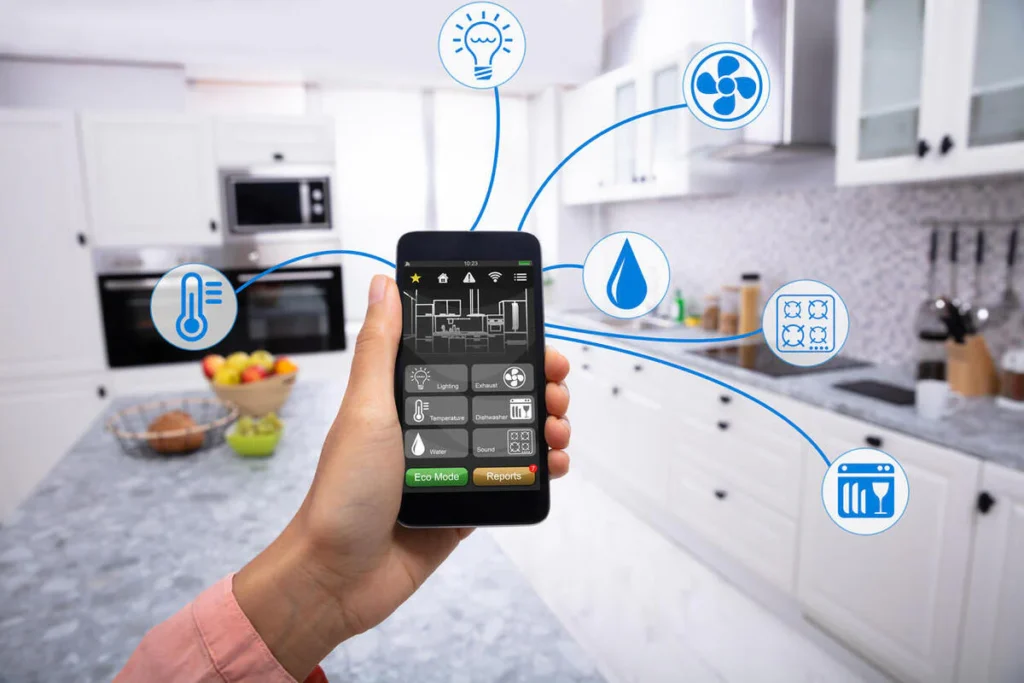
Smart home automation connects your household devices and appliances through the internet, allowing you to control them remotely or automatically. It’s more than gadgets — it’s about turning your house into a connected, intelligent ecosystem that saves energy, improves security, and enhances your lifestyle.
Key Automation Components
Smart homes rely on:
- Sensors: Detect motion, temperature, light, and humidity.
- Controllers: Central hubs or apps that manage devices.
- Actuators: Devices that respond, like smart lights, locks, or thermostats.
- Connectivity: Wi-Fi, Zigbee, or Z-Wave networks that integrate devices.
How IoT Powers Modern Homes
IoT (Internet of Things) enables devices to communicate. For instance, a smart thermostat learns your schedule and adjusts temperatures, while connected lights can turn off when no one’s home. This connectivity drives efficiency, convenience, and security, making your home smarter without constant manual control.
Benefits of Smart Home Systems in Pakistan
Energy Savings and Efficiency
Energy management is a core reason Pakistanis invest in smart homes. Smart systems reduce electricity consumption by:
- Scheduling lights and appliances.
- Monitoring usage via mobile apps.
- Integrating with solar or hybrid energy systems to maximize self-consumption.
According to local data, households using smart energy solutions can save up to 20–30% on electricity bills, a significant benefit in regions with rising energy costs.
Home Security and Surveillance
Smart home security solutions, like motion sensors, smart locks, and CCTV, provide real-time alerts and remote monitoring. Residents can watch live feeds on mobile devices, ensuring safety during load shedding or travel.
Convenience and Lifestyle Enhancement Imagine controlling lights, fans, air conditioners, and even curtains with your voice or smartphone. Automation brings comfort and lifestyle upgrades, from personalized routines to integration with assistants like Google Home or Alexa.
Smart Home Features Pakistanis Use Most
Smart Lighting and Scheduling
Automated lights adjust brightness and color based on time of day or occupancy. Features include:
- Motion-sensing lights for energy saving.
- Pre-set routines for morning or evening activities.
- Remote control via mobile apps.
Appliance Automation
From smart fridges to washing machines, devices can operate automatically, saving both time and electricity. Some appliances also provide alerts for maintenance, reducing breakdowns.
Security Cameras and Motion Sensors Modern homes use integrated smart CCTV and sensors. Alerts are sent instantly if unusual activity is detected. This is crucial in urban areas like Karachi, Lahore, and Islamabad for real-time monitoring.
Solar + Smart Home Hybrid
Why Hybrid Systems Are Future-Proof
Pakistan experiences frequent power outages, so hybrid smart homes integrating solar panels with automation are increasingly popular. Solar energy ensures uninterrupted power for smart systems, keeping your home functional even when the grid fails.
Solar-Assisted Automation for Power Outages
By linking solar and battery storage to your automation system, you get:
- Continuous lighting, security, and appliances.
- Reduced reliance on expensive diesel generators.
- Lower electricity bills and greener living.
For more information on solar integration, see our previous blog: Is a Solar System Still Worth It in Pakistan?
Costs and Installation Options in Pakistan
Average Home Automation Cost
Smart home system costs vary:
- Basic setup: PKR 50,000–150,000 (lighting, plugs, mobile control).
- Mid-range setup: PKR 200,000–500,000 (security, smart appliances).
- Full automation: PKR 600,000+ (lighting, energy, appliances, security, app ecosystem).
Local Brands vs Imported Systems
Local installers provide affordable, scalable options. Imported systems often offer advanced features and global app integration but at a higher cost. Choosing the right solution depends on budget, home size, and feature requirements.
Warranty + Maintenance Expectations
Most systems offer 1–3 year warranties. Regular software updates, battery replacement (for hybrid setups), and occasional sensor recalibration ensure long-term efficiency.
How to Choose the Best Smart Home Solution
Scalability and Device Compatibility
Opt for modular systems. Start small with lights and security, then add appliances, HVAC, or solar integration. Check device compatibility to avoid ecosystem lock-in.
Software, App Support, Ecosystem Lock-In
The mobile app should be intuitive and reliable. Consider global standards like Tuya, Google Home, Alexa, or local solutions with active customer support in Pakistan.
Frequently Asked Questions
Q1: What is a smart home automation system?
A: A system that uses connected devices to automate lights, appliances, security, and energy management.
Q2: How much does home automation cost in Pakistan?
A: Costs range from PKR 50,000 for basic setups to over PKR 600,000 for full automation, depending on features and home size.
Q3: Is smart home automation worth it in Pakistan?
A: Yes, especially due to power outages, energy savings, and enhanced security.
Q4: Does smart home automation work with solar systems?
A: Yes, hybrid systems integrate solar, batteries, and smart appliances to reduce energy costs and ensure uninterrupted power.
Q5: What are the most popular smart home features in Pakistan?
A: Smart lighting, CCTV, smart locks, motion sensors, climate control, and appliance automation.
Q6: Can I start small and upgrade later?
A: Yes, smart systems are modular. Begin with security or lighting and expand gradually.
Q7: Which smart home apps work best in Pakistan?
A: Tuya, Google Home, Alexa, and brand-specific ecosystems offer the best integration and local support.