

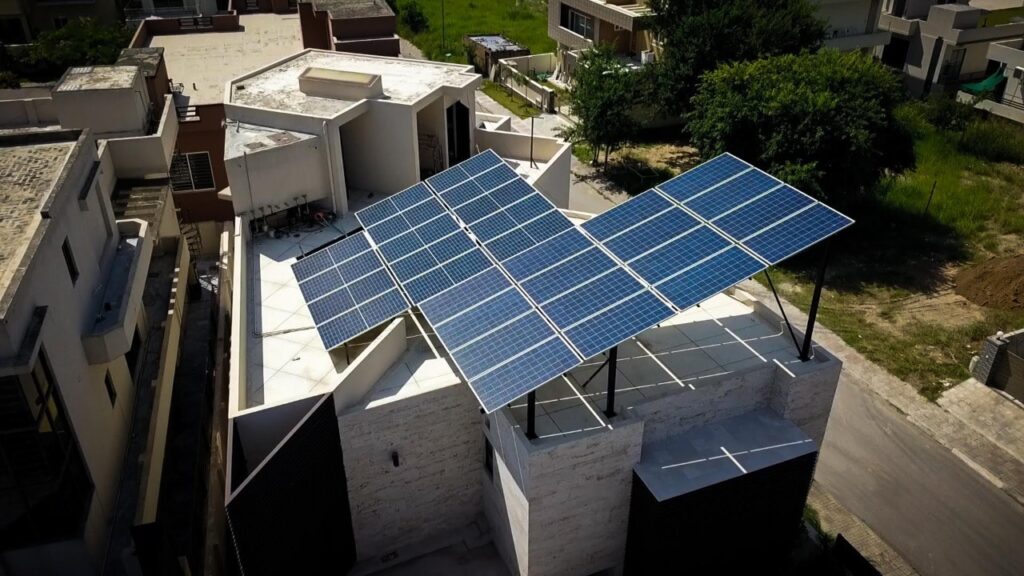
Electricity bills in Pakistan have become unpredictable. Unit rates keep climbing, backup solutions are expensive, and load shedding still disrupts everyday life. This is why residential solar solutions in Pakistan is on the rise — not for luxury, but because it’s now a practical long-term solution.
I’ve written this guide to help you understand how residential solar solutions in Pakistan actually work, what it costs, and how much it can save you over time. I’ll walk you through real numbers, common system sizes, the installation process, and the financial benefits — in simple, clear language.
Why Homeowners in Pakistan Are Switching to Solar
Rising electricity rates and load shedding
Pakistan’s electricity prices have increased by over 85% in the last three years, and tariff adjustments are expected to continue. Many homeowners now pay higher peak-hour penalties without getting a stable supply. Residential solar solutions in Pakistan helps offset both challenges:
- Reliable daytime power
- Reduced peak-hour costs
- Less dependency on UPS, generators, and fuel
Financial advantages of home solar
For an average household, a properly sized solar system can reduce monthly bills by 70–100% depending on net metering. And since solar systems last 20–25 years, the savings add up significantly.
- A 5kW home solar system often pays for itself within 2.5–4 years
- After the payback period, the electricity it generates is essentially free
- Homeowners save tens of lakhs across the system’s lifetime
Solar is no longer just an alternative — it’s a financial strategy.
Types of Residential Solar Systems in Pakistan
Each home requires a different type of setup based on budget, backup needs, and energy usage. Here’s a simple breakdown.
On-Grid Solar Systems
Ideal for homes with low to moderate backup needs.
- No batteries
- Lower installation cost
- Supports net metering
- Best efficiency and fastest ROI
This is the most popular choice for urban homes.
Hybrid Solar Systems
The best balance between savings and backup.
- Batteries + grid + solar panels
- Works during load shedding
- Higher cost but better flexibility
- Suitable for homes with ACs, fridges, and 24/7 load requirements
Off-Grid Solar Systems
More suitable for remote areas with no grid access.
- Fully battery-dependent
- Higher installation and maintenance costs
Not recommended for urban areas unless load shedding is severe
Which Solar System Size Is Best for Your Home?
Choosing the correct capacity is crucial. Undersizing leads to shortages, and oversizing increases initial cost.
Common System Sizes (3kW, 5kW, 10kW)
3kW System (small homes)
Runs: lights, fans, fridge, TV, small appliances
Monthly bill replacement: Rs. 10,000–18,000
5kW System (average homes in Pakistan)
Runs: 1 AC + normal home load
Monthly bill replacement: Rs. 18,000–35,000
10kW System (large homes)
Runs: multiple ACs + full home load
Monthly bill replacement: Rs. 40,000+
How many panels do you need?
Depending on panel wattage (540W–650W):
- 3kW system: 6–8 panels
- 5kW system: 10–12 panels
- 10kW system: 18–20 panels
Homeowners with high AC usage should size the system slightly larger. If you’re also exploring solar for offices, shops, or industrial units, read our previous blog on Solar Panels for Commercial Use in Pakistan — it explains how businesses are cutting energy costs and increasing reliability.
Solar System Costs for Pakistani Homes
Pricing varies based on brands, inverter type, rooftop structure, and battery requirements.
Pricing Factors
1. Solar Panels
Tier-1 brands like Canadian Solar, Longi, and JA Solar cost more but offer high efficiency.
2. Inverter Type
On-grid → lowest cost
Hybrid → higher due to battery compatibility
Off-grid → depends on load size
3. Batteries
- Lead-acid → cheaper, shorter lifespan
- Lithium-ion → expensive, long-lasting, efficient
4. Installation & Accessories
Includes wiring, breakers, structure, conduit, protections, and labor.
Average Home Solar Prices (2025 Estimate)
- 3kW system: Rs. 475,000 – 650,000
- 5kW system: Rs. 700,000 – 1,050,000
- 10kW system: Rs. 1,350,000 – 2,100,000
(Prices vary by city, brand selection, and battery inclusion.)
Net Metering for Homeowners
Net metering is one of the biggest reasons why residential solar is growing so quickly.
How Net Metering Works
- Your system produces electricity
- Extra units are exported to the grid
- Your meter subtracts exported units from consumed units
- Your bill decreases significantly
Homes with 5kW and 10kW systems benefit the most.
Benefits
- Faster ROI
- Zero or very low monthly bills
- Energy independence
- Clean and sustainable power
Government approvals now take 2–6 weeks, depending on the distribution company.
Residential Solar Payback Period
For most homeowners, the payback period falls between 2 and 4 years.
What affects your ROI?
- Your monthly electricity bill
- Whether you use net metering
- The type of inverter you choose
- Efficiency of panels
- Battery usage
A properly sized system almost always pays for itself quickly because of high electricity rates in Pakistan.
Solar Installation Checklist for Homeowners
A simple checklist to avoid common mistakes:
- Check rooftop structure and shading
- Choose a reliable installer
- Confirm panel orientation (south-facing is best)
- Use high-quality wiring and protection
- Get your net metering paperwork handled professionally
- Schedule maintenance every 6 months
A clean system works better and lasts longer.
Solar power is now a practical, reliable, and financially sensible solution for homeowners in Pakistan. Whether you’re trying to cut your electricity bill, reduce dependency on the grid, or invest in long-term energy stability, a home solar system gives you full control. And with net metering and rising unit prices, the return on investment is faster than ever.
If you’re planning to install solar at your home, take your time to understand your energy needs and choose a trusted company that guides you properly. J.S Technology provides the best Residential solar solutions in Pakistan.
Frequently Asked Questions:
1. What is the best solar system size for homes in Pakistan?
Most homes use 3kW to 5kW, depending on AC usage and monthly bills.
2. How much does a residential solar system cost?
A 3kW system starts around Rs. 475,000, while 5kW and 10kW systems vary based on brands and batteries.
3. Can a house run fully on solar?
Yes. With proper sizing, batteries, and net metering, a house can run fully on solar.
4. How many solar panels are needed for 5kW?
Most installations use 10–12 panels, depending on panel wattage.
5. Is net metering available for residential users?
Yes. Homeowners can apply and get approval within 2–6 weeks.
6. What is the payback period for home solar systems?
Usually 2–4 years, depending on consumption and system size.
7. How do I maintain solar panels at home?
Clean panels every 2–4 weeks to maintain efficiency.