

What’s really going on under that sleek, glassy surface?
Have you ever stared at a solar panel and thought, “What’s really going on under that sleek, glassy surface?” or “How Solar Panels Work”. Don’t worry—you’re not alone. Solar panels can feel like a high-tech mystery, but trust me, they’re simpler than they seem. Let’s break it all down, from watts to inverters, in a way that even someone without an engineering degree can get. By the end of this, you’ll know your panels inside out—and be one step closer to slashing those electricity bills. Speaking of which, check out my other blog, Solar Energy and Your Bills, for tips on saving money!
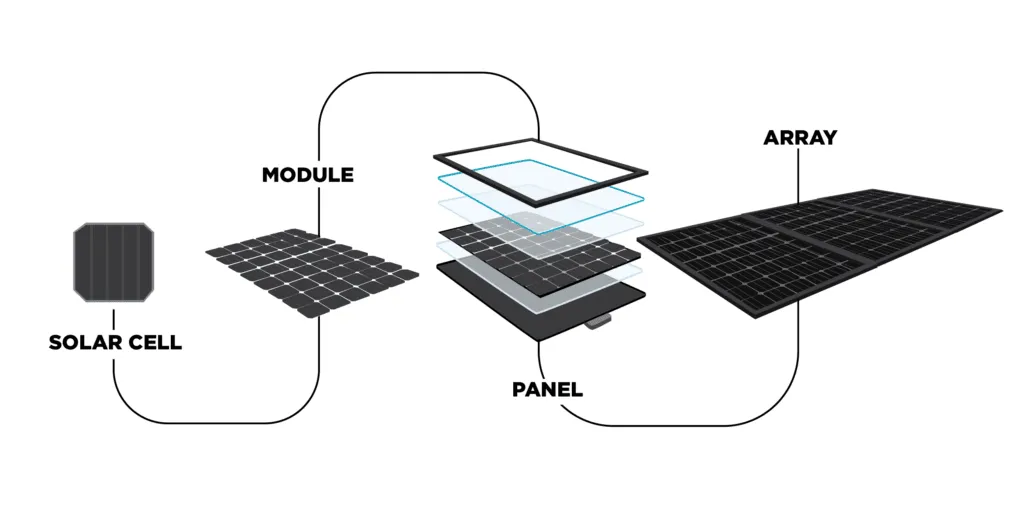
The Anatomy of a Solar Panel
Think of a solar panel as a sandwich:
- Top Layer (Glass): Protects the panel from the weather.
- Middle Layers (Cells): The hardworking breadwinners, these convert sunlight into electricity.
- Back Layer: Keeps everything insulated and moisture-free.
The cells themselves? They’re made of silicon, a material that’s fantastic at soaking up sunlight and spitting out electricity.
Common Solar Terms Explained
Getting into solar? Here’s the lingo you need to sound like a pro at your next dinner party.
Watt (W)
A watt measures power. Think of it like horsepower for solar panels. A 300W panel can produce 300 watts of power per hour under perfect sunlight. More watts = more juice.
Kilowatt-hour (kWh)
This is the energy your panel produces or your home consumes. One kWh powers a fan for 10 hours or a fridge for an hour.
Efficiency
Not all panels are created equal. Efficiency measures how much sunlight the panel turns into electricity. A 20% efficient panel converts 20% of sunlight—so higher efficiency means fewer panels to install.
Monocrystalline vs. Polycrystalline
Sounds fancy, but here’s the deal:
- Monocrystalline: More efficient but pricier.
- Polycrystalline: Cheaper, slightly less efficient, but still gets the job done.
How Panels Work with the Rest of the System
Let’s be real, a solar panel isn’t a solo act. It’s part of an ensemble cast!
Inverters
Think of the inverter as your translator. Solar panels generate DC (direct current) electricity, however your home requires AC (alternating current). The inverter converts DC to AC, ensuring your electronics continue functioning.
Battery Storage
Do frequent power cuts? Batteries let you store excess energy for rainy days—or load-shedding hours.
Net Metering
This one’s a game-changer. If your system produces more electricity than you use, it feeds back into the grid, and you earn credits. In some cases, you can even lower your bill to zero. Sounds like a win, right?
What to Look for in a Solar Panel?
Shopping for panels in Pakistan? Keep these tips in mind:
- Durability: With Karachi’s heat and dust, choose panels that can handle extreme conditions.
- Warranty: A good panel lasts 25 years—warranties should reflect that.
- Certification: Look for IEC or TUV certifications, proving the panel meets international standards.
- Local Support: Ensure there’s after-sales support for maintenance and troubleshooting.
Why Understanding Solar Terms Matters
Imagine buying a car without knowing what an engine or mileage is. It’s the same with solar panels. A little knowledge goes a long way in helping you make informed decisions and avoid scams in the market. You’ll also understand how to maximize your investment.
Closing Thoughts: Solar Power Isn’t Rocket Science—It’s Your Future
What’s stopping you?
We’ve covered a lot, from watts to warranties, but here’s the bottom line: Solar energy isn’t just about saving money (though that’s a huge bonus). It’s about investing in a cleaner, greener Pakistan. By understanding these terms, and most importantly, how solar panels work. You’re not just a buyer—you’re an informed advocate for renewable energy. So, what’s stopping you?